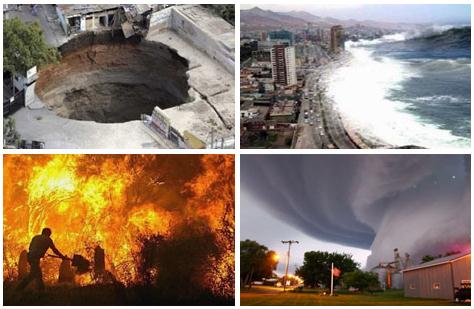
 Let us begin with Hazards definition. Hazards are a threat of a naturally occurring situation that will have a negative effect on the people or the environment. There are couples of areas, f we can call them that, of hazards. We can find Atmospheric hazards such as, heat wave, drought, tornadoes, cyclone storms and blizzard. Geologic hazards like: earthquake, volcanic eruptions, avalanche and landslide. Another category will be hydrologic which are floods and tsunamis.
Disasters on the hand are events that happen that negatively affect the environment, property, and human life, and can complicate the functions of life. Disasters are a result of natural causes or a human action like industrial (nuclear radiation, oil spill), health (epidemics). https://youtu.be/QaU1-vEHACo
The difference between the two is that Hazards only turn to be a disaster if there was an impact or a collision with people. For example, when hurricane Katrina was still outside the mainland it was considered to be a hazard, but once it touches down and disrupts the life on land it became a disaster because it can leave a serious amount of damages and death. https://youtu.be/StMN0HKDFak
The definition of catastrophe is any large and disastrous event of great significance. A disaster beyond expectations.

The difference between catastrophe and a disaster is the severity and intensity of the event that occurs “Catastrophe is sometimes used to refer to an event that has more destructive, severe and long lasting effects than a disaster.” So we can say a disaster can turn to be a catastrophe when an event has a disastrous end. http://www.yourdictionary.com/catastrophe#1eqZycJrmADQYIhm.99
