At this stage, we covered a decent amount of hazards that
Morocco deals with. I wanted to choose two of the most dangerous hazards that I
believe my country is in need to create a solution before its too late. These hazards I talked about them before
and really think they are a danger to the safety of the country and could possibly end up in a crises, so I will give a summary with some statistics to help.
As I wrote about it in my previous blogs, Morocco is a
country that is located at the top of Africa, surrounded by the Atlantic ocean
on the west, the Mediterranean from the north, and Algeria from the east.
Seeing it on the map we might think that most of the problems or hazards come
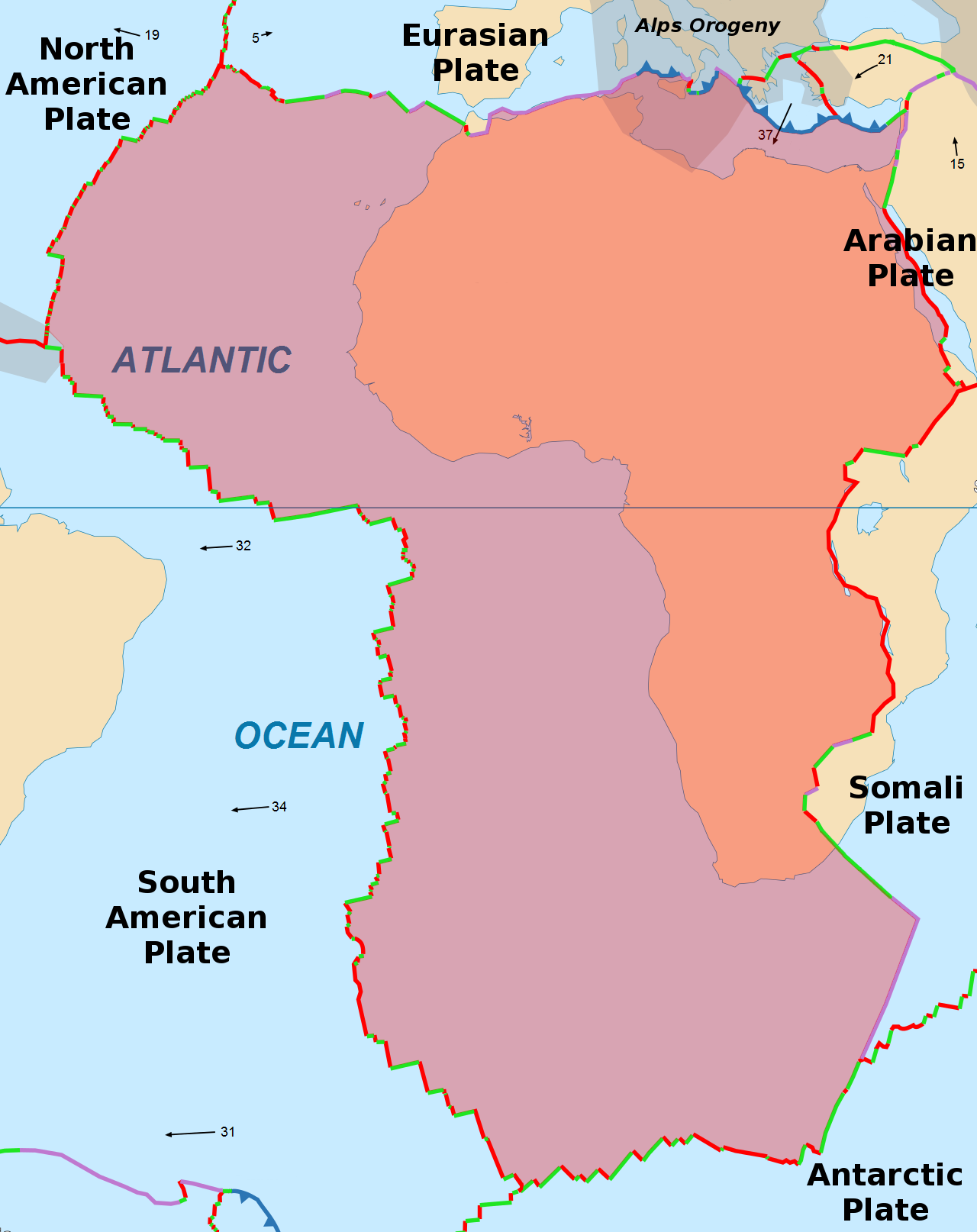
from the sea. However, is not the case. From the Tectonic plate blog, we
discovered that northern part of Morocco lay on top of two plates boundaries,
the African one, and Eurasian one. So we can immediately conclude that the
first hazards that the country need to deal we and be prepared for all the time
is earthquakes. The border plates are known as a transform fault, which means
two tectonic plates slide past one another. Each year the African plate moves
upwards to the Eurasian plate and that create friction and tension between each
other; and eventually, that energy will be released under a form of waves under
the earth surface, which generally make the earth move in a certain intensity
and that what make the earthquakes deadly or not. The most affected area is the
northern section of Morocco since it is in direct contact with the plate. In
order to prevent a major disaster, here is some recommendation that would help:
Have regular programmes in schools and advertisement that keep people aware of
the danger and the step necessary in case of an emergency. Create research
teams to monitor every activity possible near the plate boundaries, and provide
necessary equipment and the latest technology in earthquakes to keep track of
the data; that later would be combined with the historical data recorded for
better prediction. Also, Create an emergency evacuation plan for the northern
region that is being in the danger zone and has a high percentage of facing a
major earthquake.
Morocco never had to deal with hurricanes or cyclones
even it has two coastal borders, but it recorded some severe storms, so I don’t
think that is something the country is threatened by at this moment unless the climate
changes are getting worst and disrupting the system. What Morocco need is a
serious land management due to erosion.
Erosion is the second hazards because it is present, and
visible throughout the country’s land. Most of Morocco’s soils are fragile and
subject to erosion. The country has scarce natural resources, especially arable
land, and water. Intensive agricultural production, large-scale irrigation
schemes, industrialization, and urbanization have been creating mixed outcomes
in the country. In addition, from living there as an example, the country has
faced severe problems of air, water and soil pollution, environmental health
problems, deforestation and soil erosion and is regarded as very vulnerable to
the impacts of climate change. Not only that, natural hazards such as floods and
droughts occur periodically as I was able to explain in wildfires and drought
forum. It is estimated that areas in the process of degradation affect the
livelihoods and food security of about 1.5 million households in Morocco, who
then further extend their agricultural production and livestock systems to
other marginal and fragile lands, thus seriously further degrading the natural
resource base. An economic analysis has estimated the global cost of lost
productivity in Morocco as a result of land degradation at between USD 91 and
178 million per year.
With a total land area of 71.085 million hectares, Morocco’s
land use can be summarized as 5.8 million hectares of forests (8%), 9.2 million
ha of agricultural lands (13%) and 46 million ha of pastures, rangelands, and
deserts. The plant biodiversity in Morocco registers 4500 species, with 537
endemic species. This means the country lies in second place in terms of
diversity in the Mediterranean basin after Turkey. What I want to mention as
well, is that the southern part of Morocco is basically a desert, which is an
unforgivable condition as we know. What makes this issue even more complicated
is that the fact that the wind action transports eroded material above or along
the surface of Earth either by turbulent flow or by laminar flow (in which
adjacent sheets of air slip past one another); and that make the land more
vulnerable. And in my opinion, the southern parts would be a priority area/region, to at least
reduce the speed of the erosion process. An example of solution could be:
buildings barriers, increase the number of trees planted and preserving any
kind of vegetation that already exist to help, plus inform the citizens and
educating them of how important it is to not destroy whats left.
I would construct my house somewhere were there no
possibility of having to deal with an earthquake for sure. So I would have my
house exactly near where my family house is in right now ( the north-west of
Morocco) and here is why. The city where my family lives is located in the
number agricultural region of the country, so the natural resources like
vegetation and water are available. Plus my city is forming a triangle that we
call the economic triangle, which is a group of three cities (kenitra, Rabat,
Casablanca) that are well developed and can cope with a disaster.Plus the
necessary help and equipment would be much closer and have an easy access to it
if I would have my house inland for example.
Note: the statistic
and some terminology were taken from these sources,
https://www.britannica.com/science/erosion-geology
http://geology.com/nsta/transform-plate-boundaries.shtml